

June 21, 2025 Story by: Publisher
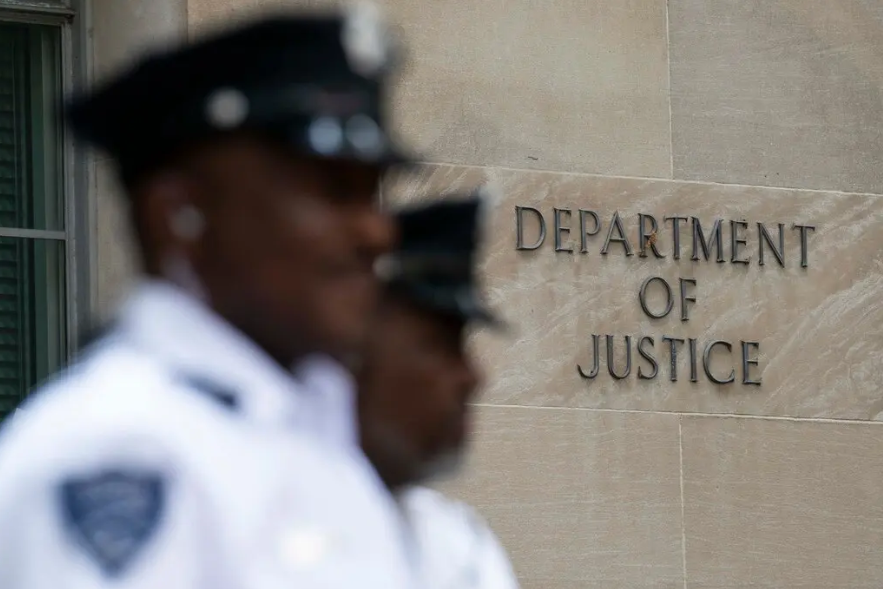
The U.S. Department of Justice has lodged a statement of interest in the ongoing Alabama redistricting lawsuit—Allen v. Milligan (599 U.S. 1)—in the Northern District of Alabama, urging the court to reject plaintiffs’ request that Alabama be required to preclear all future congressional redistricting plans under Section 3(c) of the Voting Rights Act.
Three sets of plaintiffs filed lawsuits arguing that two congressional districts in Alabama should be majority Black. The Court found that Alabama’s attempt to create a second majority-Black district was insufficient.
Alabama agreed to use the Special Master’s Remedial Map going forward and has explained to the Court that it will not seek to redistrict again until after the 2030 Census. One plaintiff argues that it is insufficient and seeks Section 3(c) relief.
“The issues raised by the plaintiffs in this case have been remedied by the State of Alabama’s agreement to use the Remedial Map and pledge to not seek to redistrict again until after the next Census—over five years from now,” United States Attorney Prim Escalona for the Northern District of Alabama said. “The plaintiffs’ request to impose preclearance would unnecessarily tax principles of equal sovereignty that afford Alabama the Constitutional right to manage its own elections.”
An appeal was filed June 6 by Secretary of State Wes Allen, state Sen. Steve Livingston, R-Scottsboro, and Rep.Chris Pringle, R-Mobile.
In a May decision, the three-judge panel—two judges appointed by President Trump—issued a rare rebuke of legislative maneuvering:
“It would be remarkable — indeed, unprecedented — for us to hold that a state legislature that purposefully ignored a federal court order acted in good faith. It would be shocking for us to hold that a state legislature that intentionally ignored a federal court order for the purpose of (again) diluting minority votes acted in good faith. And it would be unthinkable for us to hold that a state legislature that purposefully took calculated steps to make a court-required remedy impossible to provide, for the purpose of entrenching minority vote dilution, acted in good faith,” the panel said.
The panel — comprised of U.S. Circuit Judge Stanley Marcus, a Bill Clinton appointee originally elevated to the federal bench by Ronald Reagan, U.S. District Judges Anna Manasco and Terry Moorer, both Donald Trump appointees — cited legislative actions, public statements, and procedural irregularities.
The panel heard arguments in the case during an 11-day trial featuring 23 witnesses and more than 2,600 pages of evidence. It rejected claims from members of the Legislature that they were acting in good faith.
“We are troubled by the state’s view that even if we enter judgment for the plaintiffs after a full trial, the state remains free to make the same checkmate move yet again — and again, and again, and again,” the panel wrote. “On the rare occasion that federal law directs federal courts to intrude in a process ordinarily reserved for state politics, there is nothing customary or appropriate about a state legislature’s deliberate decision to ignore, evade, and strategically frustrate requirements spelled out in a court order.”
The panel ruled the map was impermissible for future elections and invited plaintiffs to seek restoring pre‑clearance under the VRA, potentially placing Alabama once again under federal oversight for election law changes. The court set a June 9 deadline for parties to clarify which district map would govern until 2030, and whether pre‑clearance should be imposed.
The filing asked the Supreme Court to consider a May federal court ruling on Allen v. Milligan, in which judges found the Alabama Legislature to have intentionally discriminated against Black voters and violated the Voting Rights Act and the 14thAmendment through a 2023 congressional district map drafted by the state’s Legislature.
The three-judge panel that heard the case ruled the 2023 map may not be used in future elections.
Under Alabama’s existing 2021 redistricting plan—approved by the GOP‑controlled state Legislature—the state maintained one black‑majority district (District 7). Civil rights advocates challenged the map, arguing that it diluted Black voting strength in violation of Section 2 of the Voting Rights Act (VRA) and the 14th Amendment.
Background: The Milligan Case
The case centers on allegations that Alabama’s 2021 and 2023 congressional maps—each with only one majority-Black district despite Black residents making up roughly 27% of the state’s population—diluted Black voting power, violating Section 2 of the Voting Rights Act.
In June 2023, the Supreme Court, in Allen v. Milligan (599 U.S. 1), ruled 5–4 that Alabama must create two black‑majority congressional districts. The Court held that the 2021 map likely violated the VRA and reaffirmed the lower court’s injunction requiring a second majority‑Black district.
The Court agreed that plaintiffs were likely to prevail on their Section 2 claim against Alabama’s 2021 map. The Court’s 5-4 decision effectively mandated creation of a second majority-Black district.
In response, the Alabama legislature approved a new map in 2023 with one majority-Black district and a second district that was roughly 40% Black. The federal panel, however, still found that map intentionally discriminated against Black voters for failing to produce two Black-opportunity districts as required by law.
After trial, the three-judge court appointed a special master who drew a remedial map. That map shifted boundaries so that Alabama’s 2nd and 7th congressional districts are majority-Black or nearly so.
Section 3(c) preclearance is designed for cases with persistent constitutional violations, the DOJ said—but since Alabama has remedied its maps and paused redistricting, the standard isn’t met.
Preclearance was once common under Section 5 of the Voting Rights Act, but the Supreme Court in Shelby County v. Holder (2013) struck down that mandate, requiring separate triggers—like Section 3(c)—for new jurisdiction-specific supervision.
The Civil Rights Division’s Voting Section enforces federal statutes that protect the integrity of the vote, including the Voting Rights Act, National Voter Registration Act, Help America Vote Act, and the Uniformed and Overseas Citizens Absentee Voting Act.
The court will schedule a hearing to consider whether Alabama’s current compliance is enough to deny plaintiffs’ plea for preclearance.
Source: Department of Justice