


March 3, 2026 Story by: Publisher
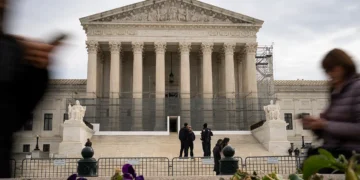
The U.S. Supreme Court on Monday blocked a lower court’s order that would have forced New York to redraw the boundaries of its only Republican-held congressional district — a decision that preserves the existing map for now and represents a pivotal moment in the ongoing national redistricting battles.
The case centers on New York’s 11th Congressional District, which encompasses Staten Island and parts of southern Brooklyn. A New York state judge had ruled earlier this year that the district, as currently drawn, violated the state constitution because it diluted the voting power of Black and Latino residents and ordered the state’s independent redistricting commission to redraw the map ahead of the 2026 election cycle.
But in an emergency appeal, Republican Rep. Nicole Malliotakis, who represents the district, and other GOP officials succeeded in persuading the Supreme Court to stay the state court’s order — effectively preventing any new lines from taking effect for the upcoming elections.
Conservative Court pushes back on redistricting order
The majority did not explain its reasoning, but most concerning was the concurring opinion by Justice Samuel Alito, in which he wrote that districts drawn “for the express purpose of ensuring that ‘minority voters’ are able to elect the candidate of their choice” represented “unadorned racial discrimination, an inherently ‘odious’ activity that violates the Fourteenth Amendment’s Equal Protection Clause except in the ‘most extraordinary case.’”
Sharp dissent from the Court’s liberals
Dissenting from the decision were Justices Sonia Sotomayor, Elena Kagan and Ketanji Brown Jackson. Writing for the three, Justice Sotomayor objected to the Supreme Court’s decision to step into the case now, though she did not defend the ruling that has been challenged.
“Time and again, this Court has said that federal courts should not meddle with state election laws ahead of an election. … Ignoring every limit on federal courts’ authority, the Court takes the unprecedented step of staying a state trial court’s decision in a redistricting dispute on matters of state law without giving the State’s highest court a chance to act,” Sotomayor wrote.
By granting the stay, the Supreme Court ensures that the existing district map — which has been in place since redistricting following the 2020 census — will remain intact for the 2026 cycle, maintaining the political status quo for New York’s lone Republican-held House seat.
Part of Wider Redistricting Clashes
The dispute in New York is just one flashpoint in a broader national tussle over congressional maps ahead of the midterms. Across the country, both parties have engaged in aggressive redistricting efforts and litigation, seeking maps that favor their electoral prospects. In recent months the Supreme Court has also allowed new maps in Texas and California to be used despite ongoing challenges, illustrating how these battles continue to shape the political terrain.
Republicans, who hold a narrow majority in the U.S. House, have emphasized the importance of defending districts like New York’s 11th to preserve their advantage. Democrats and voting rights advocates, meanwhile, have argued that maps should reflect fair representation for minority populations and be subject to rigorous scrutiny for potential racial or partisan bias.
What happens next
With the Supreme Court’s intervention, New York will not redraw the 11th District’s lines for the upcoming election — at least for now. The dispute may still play out through further litigation in both state and federal courts, but any changes will likely have to wait until after the 2026 election cycle is underway or concludes.
The U.S. Supreme Court heard re-arguments in the case of Louisiana’s congressional maps on Wednesday, October 15. This comes after the highest court in the land paused on ruling on the case in the previous term, which ended in June.
On Oct. 15, President and Director-Counsel Janai Nelson argued before the U.S. Supreme Court in Louisiana v. Callais, a case about equal representation for Black voters in Louisiana and the role of race in redistricting.
“Does the State’s intentional creation of a second majority‑minority congressional district violate the Fourteenth or Fifteenth Amendments to the U.S. Constitution?“
If the justices determine Louisiana violated the constitution with its latest congressional map, it could undermine the Voting Rights Act. The legislation was approved in 1965 to bolster the protections granted in the 14th and 15th Amendments. It has been amended five times since then to strengthen its provisions, though voting rights advocates note federal court rulings over the past decade have chipped away at the law.
At question in the Callais case is Section 2 of the Voting Rights Act, which prohibits voting laws or procedures that purposefully discriminate on the basis of race, color or membership in a language minority group.
As courts continue to grapple with redistricting disputes nationwide, the balance of power in the House and broader questions about how electoral maps reflect demographic change remain intensely contested heading into the next election cycle.