

Thursday, March 5, 2026 Story by: Publisher
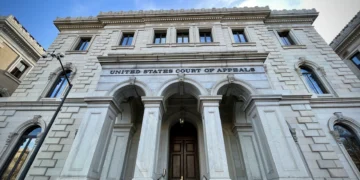
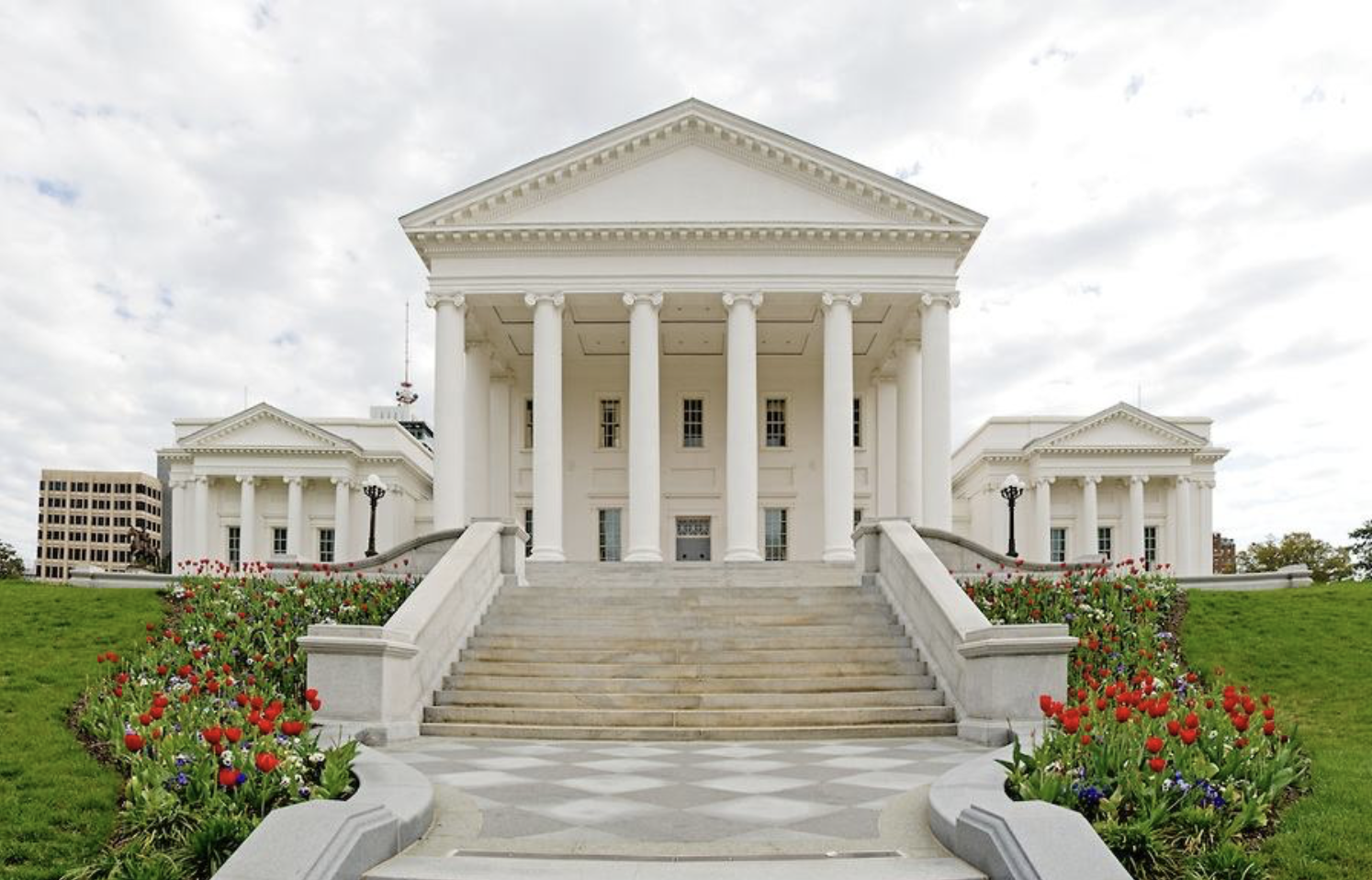
The Virginia Supreme Court has stayed a lower court injunction from Tazewell County, clearing the path for a statewide redistricting referendum to proceed as scheduled on April 21. Early voting will start on March 6.
In its ruling, the court emphasized that “issuing an injunction to keep Virginians from the polls is not the proper way to make this decision,” effectively allowing early voting to begin this Friday. While the justices have not yet ruled on the ultimate constitutionality of the mid-decade redistricting plan, their decision ensures that voters will have the opportunity to weigh in on the proposal before the legal challenges are fully resolved.
Although a lower court judge briefly threw the referendum into chaos by labeling the “10-1” redistricting plan unlawful, a Richmond circuit court ultimately cleared the path for the vote to proceed, dismissing challenges from the City of Lynchburg and Republican plaintiffs.
This allows early voting to begin this Friday, March 6, even as the Virginia Supreme Court continues to review the underlying constitutional questions. If voters approve the amendment, Democrats could potentially flip four seats in the 2026 midterms, a move state leaders frame as a necessary counter-offensive to Republican gerrymandering in states like Texas and North Carolina.
A Virginia court stalled a planned April referendum to redraw congressional maps on Thursday, February 19, hampering Democratic efforts to pick up four U.S. House seats.
This ruling could effectively stop the referendum for the year, as the restraining order lasts until March 18—well after the March 6 start of early voting. Republicans, including Reps. Ben Cline and Morgan Griffith, argue that Democrats are bypassing legal protections to rush redistricting through the legislature.
This marks the second time Tazewell Circuit Court Judge Jack Hurley Jr. has ruled against the Democrats’ redistricting agenda. In January, Hurley determined that a resolution for a constitutional amendment was passed illegally during a special legislative session, noting it was introduced too close to an intervening election.
In response, Democratic Attorney General Jay Jones pledged to appeal the Tazewell Circuit Court’s temporary restraining order. The order was requested by the RNC and NRCC, which claim the ballot’s timing and language are unlawful.
The Supreme Court of Virginia on Friday, February 13, cleared the way for a special election on April 21, 2026, to let voters decide whether to approve a constitutional amendment that would temporarily allow the state legislature to redraw congressional districts ahead of the 2026 elections.
The ruling meant that, despite ongoing legal challenges and earlier rulings by a circuit judge that blocked the redistricting effort on procedural grounds, the referendum can still appear on the ballot while the appeal proceeds. The proposed amendment would permit the General Assembly to adopt new congressional boundaries mid-decade — a departure from the usual once-per-decade process — in response to aggressive redistricting efforts in Republican-led states that could shift the balance of power in the U.S. House.
The Virginia Supreme Court will hear the redistricting appeal and has denied motions to stay the lower court’s injunction, clearing the way for the April 21 referendum to proceed.
The decision by the Virginia Court of Appeals reflects the urgent and contested nature of mid-decade redistricting efforts in the state as lawmakers work toward the 2026 U.S. House elections.
In late January, a Virginia state judge issued an injunction against the state’s effort to redistrict, ruling that the proposal is not valid for a statewide referendum until after the 2027 election.
The decision halted an initiative that sought to reopen the redistricting process outside the traditional post-census timeline and prevents the measure from appearing on the ballot ahead of the 2026 elections.
In its ruling, the court found that the proposal failed to meet constitutional requirements governing how and when amendments may be submitted to voters, emphasizing that changes affecting election law must follow a prescribed sequence across multiple legislative sessions.
As a result, Virginia’s existing congressional districts will remain in place for the upcoming election cycle, reinforcing the judiciary’s role in policing procedural compliance while leaving broader redistricting questions unresolved beyond 2027.
Background
The Virginia General Assembly had approved a proposed constitutional amendment that would allow state lawmakers to redraw Virginia’s congressional districts before the next census, setting up a consequential statewide referendum that could reshape the political landscape ahead of the 2026 midterm elections.
The Virginia House of Delegates advanced a bill that set April 21 as the date for a redistricting referendum, allowing voters to decide whether to allow a mid-century redraw of Virginia’s congressional district.
The measure, passed along party lines by Democratic majorities in both the House of Delegates and the Senate, does not immediately alter existing congressional maps. Instead, it asks voters to decide whether to temporarily grant the legislature authority to conduct mid-decade redistricting — a power Virginia lawmakers currently do not possess under the state constitution.
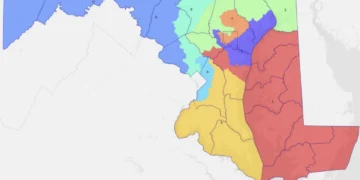
The Virginia State Senate voted 21-18 to allow voters to decide on mid-decade redistricting via ballot referendum. If approved, the change was projected to give Democrats an advantage of roughly 4 to 5 U.S. House seats, depending on the final map.
If voters approve the amendment, the General Assembly could redraw congressional districts before 2030, bypassing the standard post-census redistricting timeline. However, the authority would be both conditional and time-limited, expiring before the next decennial redistricting cycle.
A conditional change to Virginia’s redistricting rules
Under Virginia’s current constitutional framework, congressional and legislative districts are redrawn every 10 years following the U.S. Census. That process was significantly altered by voters in 2020, when Virginians approved the creation of a 16-member bipartisan redistricting commission intended to reduce partisan influence over map-drawing.
The proposed amendment would carve out a narrow exception to that system. According to legislative text and floor debates, the General Assembly would only gain mid-decade redistricting authority if other states enact congressional map changes outside the normal census cycle, allowing Virginia to respond to shifts in the national political balance.
Supporters say the contingency is critical, framing the amendment as a defensive measure rather than an open-ended expansion of legislative power. They argue that Republican-controlled legislatures in other states have already redrawn congressional maps mid-decade, potentially altering the partisan composition of the U.S. House.
Opponents, however, counter that the proposal undermines the spirit of the 2020 redistricting reforms and reopens the door to partisan gerrymandering, even if the authority is temporary.
What the amendment did?
Crucially, the amendment did not itself redraw district lines. Even if voters approved the measure, lawmakers would still need to pass separate legislation adopting a new congressional map.
Political analysts have noted that new district boundaries could, depending on how they are drawn, benefit Democrats, who currently hold six of Virginia’s 11 U.S. House seats. Some projections suggest that revised maps could strengthen Democratic prospects in additional districts. But those outcomes are speculative, not guaranteed, and would depend entirely on future legislative action.
Republican lawmakers have seized on those projections to argue that the amendment is a partisan maneuver masquerading as reform. Democrats reject that characterization, emphasizing that voters — not lawmakers — will have the final say on whether the constitutional change takes effect.
Voters to decide
Because the proposal amends Virginia’s constitution, it must clear a multi-step process. The amendment has now passed the General Assembly in two separate legislative sessions, satisfying the constitutional requirement for legislative approval.
The final step was a statewide referendum, expected to appear on the April 2026 ballot, when voters were expected to be asked to approve or reject the change. A majority vote in favor would authorize the legislature to proceed under the amendment’s limited terms; rejection would leave the existing redistricting framework intact.
According to guidance from Virginia’s legislative branch, constitutional amendments require this direct voter approval before becoming law, reflecting the state’s emphasis on public consent for foundational changes to governance.
A broader national context
Virginia’s action comes amid an intensifying national debate over redistricting and congressional power. With control of the U.S. House often hinging on a small number of seats, both parties have increasingly turned to state-level mechanisms — including courts, commissions, and constitutional amendments — to gain strategic advantages.
The Virginia proposal stands out because it explicitly asks voters whether lawmakers should temporarily reclaim redistricting authority, rather than relying on judicial intervention or commission deadlock to trigger map changes.
As the 2026 election cycle approaches, the referendum is likely to draw significant attention — and funding — from national political organizations on both sides, transforming what is typically a low-profile constitutional question into a central battleground over representation, fairness, and political power.
Source: AP News / Democracy Docket / NBC News / Politico