

March 05, 2026 Story by: Publisher
Scope, definitions, and source standards:
This report tracks every U.S. House seat (including two non-voting delegates) and every U.S. Senate seat currently held by a Black American as of Feb. 16, 2026, then summarizes each seat’s 2026 electoral posture (running, retiring, running for other office, or unknown; and “not up in 2026” for Senate seats not scheduled this cycle). The report also details the 2026 primary election results.
Election results (March 4, 2026)
Arkansas gubernatorial primary:
In the 2026 Arkansas gubernatorial primary, State Senator Fred Love secured a landslide victory to become the Democratic nominee, winning approximately 81% of the vote (103,933 votes), according to the Associated Press. Love easily defeated businesswoman Supha Xayprasith-Mays, who garnered 19% (24,441 votes), ensuring he avoids a runoff and moves directly to the general election.
On the Republican side, incumbent Governor Sarah Huckabee Sanders ran uncontested in her primary as she seeks a second term. Love, who has focused his campaign on economic development and opposition to the state’s school voucher program, now faces the uphill battle of challenging Sanders in a state that has not elected a Democrat to statewide office since 2010.
Arkansas U.S. House primary:
Arkansas’ 2nd Congressional District
In the Democratic primary for Arkansas’ 2nd Congressional District, Chris Jones, the 2022 Democratic gubernatorial nominee, won his primary in a landslide. According to the Associated Press, Jones received 92.6% of the vote, totaling 46,552 votes, easily defeating Zack Huffman.
On the Republican side, French Hill fended off a challenge from Chase McDowell, winning 76% of the vote totaling 47,686 votes.
These results set up a high-profile general election matchup in November for the Central Arkansas seat, which remains a key target for Democrats despite recent redistricting that shifted the district in a more Republican-leaning direction.
North Carolina U.S. House primary:
North Carolina’s 4th Congressional District
In the Democratic primary for North Carolina’s 4th Congressional District, incumbent Representative Valerie Foushee holds a razor-thin lead over challenger Nida Allam, with the race currently considered too close to call. According to the Associated Press, Foushee leads by just over 1,000 votes. Foushee received 49.2% of the vote totaling 61,537. Allam received 48.2% of the vote totaling 60,335 votes with 99% of ballots counted. This rematch of their 2022 contest has become a focal point for the party’s “generational and ideological” divide, as Allam, a Durham County Commissioner, ran to the left of Foushee on issues like immigration and military aid to Israel. Because the margin remains within one percentage point, the race is likely headed toward a recount once provisional ballots are finalized in the coming days.
North Carolina’s 6th Congressional District
In the Democratic primary for North Carolina’s 6th Congressional District, High Point Mayor Cyril Jefferson secured the nomination to challenge incumbent Republican Representative Addison McDowell. According to the Associated Press, Jefferson won the three-way contest with 54.8% of the vote, totaling 28,211 ballots. His closest challenger, Douglas Alcorn, received 36.5% of the vote, totaling 18,791, while Mickey Hockett followed with 8.7%, totaling 4,481 with 99% of ballots counted. Jefferson’s victory sets up a difficult general election in a district that was significantly redrawn by the GOP-led legislature to favor Republican candidates. Despite the partisan lean of the district, Jefferson has pledged to focus his campaign on economic mobility and expanding access to healthcare across the Triad region.
North Carolina’s 12th Congressional District,
In the Democratic primary for North Carolina’s 12th Congressional District, incumbent Representative Alma Adams secured a decisive victory to advance toward her seventh full term. According to the Associated Press, Adams won the nomination with 79.0% of the vote, totaling 54,511 ballots. Her challenger, entrepreneur and educator Monaca Maye Williamson, received 21.0% of the vote, totaling 14,533, with 99% of precincts reporting.
On the Republican side, finance professional Jack Codiga won his primary with 67.3% (6,557 votes), defeating Addul Ali, who garnered 32.7%(3,181 votes). As the representative of a “Solid Democratic” stronghold in the Charlotte area, Adams enters the general election as the heavy favorite against Codiga this November.
North Carolina’s 14th Congressional District,
In North Carolina’s 14th Congressional District, incumbent Republican Representative Tim Moore and Democrat Lakesha Womack emerged as the victors for their respective parties, according to the Associated Press. Moore, who has held the seat since January 2025, decisively won the Republican primary with approximately 83.0% of the vote (42,434 votes), defeating challenger Kate Barr.
On the Democratic side, Lakesha Womack secured the nomination by earning 52.2% of the vote (20,586 votes), overcoming opponents Brent Caldwell and Ahmid Kargbo. The district, which covers portions of Mecklenburg, Gaston, Cleveland, Burke, and Rutherford counties, is currently rated as a “Solid Republican” seat by major political analysts, setting up a challenging general election for Womack this November.
Texas U.S. Senate primary:
In the 2026 Texas Democratic primary for the U.S. Senate, state Representative James Talarico has emerged victorious over U.S. Representative Jasmine Crockett. Crockett’s campaign focused on mobilizing the party’s base with a more combative style, whereas Talarico bet on a big-tent approach to flip a state that hasn’t elected a Democrat statewide in over 30 years. With 97% of the votes counted by the Associated Press, Talarico received 52.4% of the vote, totaling 1,210,831. Crockett followed with 46.2%, totaling 1,067,138, while a third Democrat, Ahmad Hassan, received 1.3% of the vote, totaling 30,867.
On the Republican side, the race remains undecided as incumbent Senator John Cornyn and Attorney General Ken Paxton prepare for a high-stakes runoff election on May 26. With 98% of the votes counted by the Associated Press, John Cornyn received 41.9% of the vote, totaling 903,948. Paxton followed with 40.7%, totaling 877,830, while Wesley Hunt, received 13.5% of the vote, totaling 291,803.
Following his third-place finish in the 2026 Republican primary for the U.S. Senate, Representative Wesley Hunt conceded the race but signaled his intent to remain a force in Texas politics, vowing a future “political comeback.” Hunt, who gave up his House seat to challenge incumbent Senator John Cornyn and Attorney General Ken Paxton, played a pivotal role in the contest by drawing enough support to prevent either frontrunner from securing the 50% needed to win outright.
Texas U.S. House primary:
Texas’ 1st Congressional District
In the 2026 Texas primary, the Democratic race for U.S. House District 1 is officially headed to a runoff between Yolanda R. Prince and Dax Alexander, according to the Associated Press. Neither candidate was able to secure a majority in the multi-candidate field on March 3rd, necessitating a second round of voting to determine who will challenge the Republican incumbent, Nathaniel Moran, in the November general election. The runoff, scheduled for May 26, 2026, will be a critical test of momentum for both campaigns as they vie for the chance to represent this East Texas district in Washington.
Texas’ 18th Congressional District
In the Democratic primary for Texas’ 18th Congressional District, incumbent U.S. Representatives Al Green and Christian Menefee are headed to a runoff after neither candidate secured more than 50% of the vote on March 3, 2026. This rare “member-on-member” matchup was triggered by a mid-decade redistricting plan that drew Green’s previous seat into the 18th District, currently held by Menefee, who recently won the seat in a January special election following the death of Rep. Sylvester Turner.
With 96% of the votes counted by the Associated Press, Menefee received 46% of the vote, totaling 43,595. Green followed with 44.2%, totaling 41,818, while a third Democrat, Amanda Edwards, received 7.7% of the vote, totaling 7,318. A fourth candidate, Gretchen Brown, received 2% of the vote, totaling 1,936.
Menefee and Green will face off again in a May 26, 2026 runoff to determine who will represent the safely Democratic Houston-area district.
Texas’ 22nd Congressional District
According to recent reports and the Associated Press, Marquette Greene-Scott has officially won the Democratic primary for Texas’ 22nd Congressional District outright. By securing approximately 54.6% of the vote in the March 3, 2026, primary, she surpassed the 50% threshold required to avoid a runoff. Greene-Scott defeated a multi-candidate field including Chris Fernandez (18.5%), Robert “Puga” Thomas (15.1%), Pearl Vuorinen, and Sterling Gadison. With incumbent Troy Nehls not seeking reelection, Greene-Scott now advances directly to the November 3, 2026, general election as the Democratic nominee for this open seat.
Texas’ 25th Congressional District
For Texas’ 25th Congressional District, according to the Associated Press results, incumbent Republican Roger Williams secured his party’s nomination with a uncontested election. On the Democratic side, Dione Sims—a community leader and granddaughter of “Juneteenth Grandmother” Opal Lee—won her primary outright with roughly 60.5% of the vote, defeating challenger William Marks.
Texas’ 30th Congressional District
In the Democratic primary for Texas’ 30th Congressional District, Rev. Frederick D. Haynes III secured a decisive victory to succeed outgoing U.S. Representative Jasmine Crockett. With 95% of the votes counted by the Associated Press, Haynes, the longtime senior pastor of Dallas’ Friendship-West Baptist Church, won the nomination outright with approximately 74.1% of the vote, totaling 76,555 ballots.
He easily defeated his closest challenger, former state Representative Barbara Caraway, who received 23.1% (24,324 votes), and Rodney LaBruce, who garnered 4.3% (4530 votes). By surpassing the 50% threshold, Haynes avoids a runoff and moves forward as the heavy favorite to represent this safely Democratic North Texas stronghold in the November general election.
Texas’ 31st Congressional District
In the Republican primary for Texas’ 31st Congressional District, incumbent Representative John Carter secured a dominant victory to advance to the general election. According to the Associated Press, Carter won the nomination with 59.8% of the vote, totaling 46,237 ballots. He successfully fended off a crowded field of nine challengers, including his closest opponent, Valentina Gomez, who received 10.9% (8,447 votes).
On the Democratic side, veteran and IT professional Justin Early won his primary with 57.6% of the vote, totaling 31,852, defeating Stuart Whitlow. This sets up a November matchup in a district that remains a Republican stronghold, covering parts of Central Texas including Round Rock, Georgetown, and Killeen.
Texas’ 33th Congressional District
In the Democratic primary for Texas’ newly redrawn 33rd Congressional District, former U.S. Representative Colin Allred and current State Representative Julie Johnson are headed to a May 26 runoff. With 95% of the votes counted by the Associated Press, Allred maintains a lead with approximately 44% of the vote (31,406 votes), he fell just short of the 50% threshold needed to win the nomination outright. Johnson followed with 33.2% (23,733 votes), leading candidates Zeeshan Hafeez and Carlos Quintanilla combined for the remaining 22.8%.
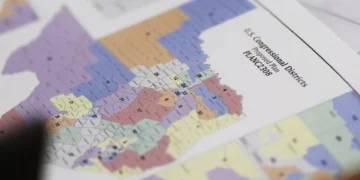
This high-profile matchup was created by a mid-decade redistricting plan that shifted the boundaries of the North Texas seat, turning it into a solidly Democratic stronghold that lacks an incumbent following Rep. Marc Veasey’s decision not to seek reelection.
Retirements/Not seeking re-election: Bonnie Watson Coleman (New Jersey’s 12th Congressional District and first Black congresswoman elected in New Jersey) ; Danny K. Davis (Illinois’ 7th Congressional District) ; Eleanor Holmes Norton (Washington D.C’s. delegate) ; Marc Veasey (Texas’ 33rd Congressional District) ; Dwight Evans (Pennsylvania’s 3rd Congressional District) ; Burgess Owens (Utah’s 4th Congressional District)
Running for Governor: Fred Love (D-AR) ; Keisha Lance Bottoms (D-GA) ; Byron Donalds (R-FL) ; Mandela Barnes (D-WI) ; John James (R-MI) ;
Running for gubernatorial re-election: Wes Moore (D-MD)
Running for Senate: Jasmine Crockett (D-TX) ; Wesley Hunt (R-TX) ; Robin Kelly (D-IL)
More than 10% of incumbents plan to leave, which is the highest percentage at this point in the calendar since at least President Barack Obama’s administration, according to an Associated Press analysis of House retirements going back to 2013.
What’s at stake in 2026 for Black representation in Congress
The 119th Congress includes a historically large cohort of Black members. The Congressional Research Service profile of the 119th Congress notes 61 African American House members (including two delegates) and five African American senators (as of the report’s date) as part of broader demographic tracking of current congressional membership.
The House’s own Black-American membership compilation for the 119th Congress also lists a large set of Black members (including both House and Senate), reflecting a broader institutional definition of “Black-American Members” that includes several members who are also Afro-Latino or Black immigrants.
The 2026 midterms occur with very narrow margins in the House—the Clerk’s member information page shows Republicans at 218 and Democrats at 214 with vacancies, underscoring how even “safe” seats can become strategically important when retirements or other-office bids create open races.
In this environment, open-seat churn inside Black-held districts has national representational stakes: a retirement or office-switch does not only change party power calculations, it can also break long running lines of Black representation in particular cities, regions, or states if successor coalitions fracture.
Senate seats held by Black Americans
NJ-Sen (Cory Booker) – This is the only Black-held Senate seat on the 2026 ballot in the set identified by the 119th-Congress baseline, and it illustrates how Black representation can become a national story even in a “blue-leaning” state because the officeholder is national-profile and fundraising-capable.
Booker’s own campaign site states that he is running for re-election, and the FEC candidate profile indicates an active federal committee and robust fundraising, which matters because early money can deter serious challengers and fund statewide field operations. The most substantive intraparty dynamic identified in reporting reviewed here is a challenge from the left (Chris Fields), which—whether symbolic or not—signals that debates about Gaza, Democratic coalition messaging, and “establishment vs. insurgent” framing are not confined to House primaries.
On the Republican side, New Jersey political reporting emphasizes uncertainty about who will take on Booker, with some names floated and at least one declared candidate; that “who will run” question is itself an indicator of the seat’s perceived competitiveness and the GOP’s strategic allocation decisions. National representational stakes: Booker is one of a small number of Black senators and is a high-visibility national Democrat, so any primary turbulence or unexpected general-election tightening would reverberate well beyond New Jersey in narratives about Black political power within the Democratic Party and the post-2024 electorate.
DE-Sen (Lisa Blunt Rochester) – This Black-held Senate seat is not scheduled for election in 2026, so the “midterm” relevance here is indirect: Blunt Rochester’s presence contributes to the small cohort of Black senators but does not face voter confirmation this cycle. For representation analysis, the key point is durability: a non-2026 cycle means the “Black Senate footprint” is less exposed to midterm volatility than the House footprint, where every seat is on the ballot.
MD-Sen (Angela Alsobrooks) – Alsobrooks is verified in the institutional Black-member list for the 119th Congress and listed as a sitting senator by state in the Clerk materials; her seat is not up in 2026. The representational significance is structural: with only a handful of Black senators nationwide, each additional Black woman senator is a meaningful increment for committee leadership pipelines, statewide donor networks, and future gubernatorial or presidential auditioning—even when a particular seat is not immediately contested.
GA-Sen (Raphael Warnock) – Warnock is a current senator and included in official Black-member compilations for the 119th Congress, but his seat is not up in 2026. Georgia’s 2026 midterm story will still run through Senate politics (including the separate Ossoff cycle referenced in broader coverage), but in strictly “Black-held seat” terms, Warnock’s representation is stable through this cycle.
SC-Sen (Tim Scott) – Scott is listed as a sitting senator and included in the 119th-Congress Black-member compilation; his seat is not up in 2026. Scott’s representational significance is that he is one of the few Black Republicans in Congress at the federal level, and an incumbent of that profile affects the national story Democrats and Republicans tell about race, party alignment, and coalition composition even when his own reelection is not imminent.
House seats held by Black Americans
The House is where the 2026 cycle poses the most immediate representational risk and opportunity because every House district (and these delegates) goes on the ballot. The pattern that emerges from the seats reviewed is not a single national “Black vote” storyline, but rather a set of recurring structural themes: open seats created by retirement, office-switches triggered by statewide ambition, and redistricting or legal disputes that reshape the electorate inside districts with strong Black political identities.
AL-2 (Shomari Figures) – Although this report does not synthesize a full challenger list, AL-2’s national significance is unusually high for a single House district because it sits at the intersection of Voting Rights Act litigation, court-ordered maps, and the durability of newly created opportunity districts. Federal court decisions described in major reporting have emphasized intentional discrimination findings against prior maps and the long-run use of court-ordered maps that produced a second Black-majority district in Alabama. In 2026, the practical political question is whether the coalition that elected the incumbent remains cohesive under turnout conditions typical of midterms, and whether national parties or outside groups treat the seat as a test case for the post-Milligan redistricting era.
AL-7 (Terri Sewell) – AL-7 is best understood as a continuity seat: a long-running Black-represented Alabama district whose national representational weight is in maintaining a durable House foothold for Black Alabamians even as statewide politics remain heavily Republican. The public record reviewed here does not surface a headline-level 2026 challenger or retirement announcement; absent that, the critical lens is succession planning and whether the district’s seat remains a stable anchor within the broader Black House delegation.
CA-12 (Lateefah Simon) – Simon’s official House biography page describes the district as encompassing parts of the East Bay (including Oakland and surrounding communities), providing a local-policy frame (housing, transit, public safety and reform politics, and affordability tend to dominate). With no specific 2026 challenger synthesized here, the representational significance is that newer Black members build seniority and committee leverage over time; safe early cycles often determine whether a member becomes a long-term power center for regional Black political networks.
CA-37 (Sydney Kamlager-Dove) – CA-37 remains important less for partisan competitiveness than for institutional power-building: seniority accumulation, caucus leadership, and the ability to shape federal spending and oversight priorities that disproportionately affect Black communities in major metros. No prominent retirement or other-office run was identified in the sources surfaced above. Kamlager-Dove will face a Democratic primary challenger.
CA-43 (Maxine Waters) – Waters’ district is emblematic of the national “generational change” debate inside heavily Democratic seats: even where general elections are unlikely to be competitive, the meaningful contest can become a nonpartisan primary (“jungle primary”) or a Democratic-leaning intraparty fight based on age, ideology, and local networks. FEC candidate pages confirm an active federal campaign account for Waters, and election trackers show other filed candidates exist, though this report does not validate a single dominant challenger as of this date. The national representational stakes are twofold: Waters is a senior Black lawmaker whose influence extends into financial policy debates, and succession in her district would be a bellwether for whether new Black leadership emerges through coalition continuity or factional splintering.
CO-2 (Joe Neguse) – CO-2’s significance is partly geographic: it reflects the growth of Black representation in places not historically associated with majority-Black congressional districts. In the absence of a verified 2026 challenger list in this report, the more durable story is about whether Black representatives in non-Southern, non-majority-Black districts continue to normalize broader forms of Black congressional representation beyond traditional district archetypes.
CT-5 (Jahana Hayes) – CT-5 is one of the clearer “watch” seats among Black-held House districts because it has recently displayed competitive tendencies, and local reporting identifies a Republican challenger (Michele Botelho). Ballot trackers also show additional names on the Democratic side, indicating potential intraparty pressure even if the seat is usually expected to remain Democratic. The dynamic here is a classic midterm test: if national mood and turnout shift against the incumbent’s party, seats that are not deep-blue can tighten quickly. For Black political representation, CT-5 matters because it is an example of a Black incumbent holding a seat where victory is earned through cross-community coalition rather than demographic dominance, making it a bellwether for multiracial suburban coalition durability.
DC-Delegate (Eleanor Holmes Norton) – While the DC delegate is non-voting, the seat is symbolically enormous for Black political representation because it sits at the nexus of representation, democracy reform, and DC statehood debate. Norton has decide not to seek re-election and will not be running again in the 2026 midterm.
FL-10 (Maxwell Frost) – FL-10 is a newer-generation profile seat: a young Black representative in a large-state delegation. With no verified 2026 challenger details synthesized here, the main analytic frame is whether Florida’s broader political environment, turnout shifts, and migration dynamics create new pressure points for Democratic incumbents—even in districts that often lean Democratic.
FL-19 (Byron Donalds) – This seat is unusually complicated because the incumbent has announced a run for Florida governor, yet an FEC filing from the incumbent’s congressional committee indicates he had not officially ended his congressional re-election campaign as of mid-2025. That dual-track posture matters: it can freeze potential House successors and deter challengers until the incumbent clarifies whether he will actually forgo House reelection. For Black representation, Donalds is one of the very small number of Black Republicans in the House (and a nationally visible Trump-aligned figure); whether he stays, leaves, or engineers a successor shapes the GOP’s “diversity” narrative and the practical Black Republican pipeline.
FL-20 (Sheila Cherfilus-McCormick) – This seat typically centers around South Florida’s unique coalition politics (Caribbean diaspora communities, labor/service economies, and immigration-adjacent policy). Cherfilus-McCormick will face multiple primary challengers in the upcoming 2026 Democratic primary.
FL-24 (Frederica S. Wilson) – Florida’s 24th is important because the incumbent is in the cohort of older, long-serving Black lawmakers frequently discussed in “retirement watch” narratives; however, this report does not identify an official retirement announcement as of the date. The representational risk is that open-seat contests can fracture coalition maintenance if successor selection becomes a multi-faction fight.
GA-2 (Sanford Bishop Jr.) – GA-2 is notable because it is one of the few Black-held districts that sits nearer the “moderate/conservative Democrat” brand lane; election trackers report a Democratic primary challenger (Danny Glover). The national significance is strategic: if moderates are primaried successfully, it reshapes the ideological composition of the Black House delegation and can alter how national party leadership communicates about rural and small-city Black constituencies in the South.
GA-4 (Hank Johnson) – With no specific 2026 race developments synthesized here, GA-4’s story is about continuity in metro Atlanta’s Black representation and how Georgia’s rapid demographic and economic shifts influence district-level coalition politics. Johnson will face multiple primary challengers in the upcoming 2026 Democratic primary.
GA-5 (Nikema Williams) – GA-5 is a core Atlanta Black-representation seat. Absent a documented 2026 challenger, the key representational question is succession planning: when district politics are defined by local party organizations and civic institutions, the eventual “next” member can shape national policy influence.
GA-6 (Lucy McBath) – GA-6 is a suburban Atlanta seat tied to the national story of gun violence politics and suburban realignment (even when not directly summarized in this report). No 2026 status change is identified here.
GA-13 (David Scott) – GA-13 is another anchor seat for Black representation in Georgia. Scott will face multiple primary challengers.
IL-1 (Jonathan Jackson) – Chicago-area Black representation often hinges more on primary-era coalition sorting than general election competitiveness. This report does not synthesize a 2026 challenger list for IL-1.
IL-2 (Robin Kelly) – Same analytic frame as other Chicago-area seats: coalition politics inside the Democratic primary more than general election. Kelly is running for the U.S. Senate.
IL-7 (Danny K. Davis) – This is a major representational hinge seat because Davis has announced he will not run again, producing an open-seat contest in a historically Black Chicago district. Davis endorsed Illinois state Rep. La Shawn Ford in public reporting and in his own announcement, signaling an attempt to shape succession—and, implicitly, to protect continuity of Black representation. The field is crowded by most accounts, which is typical when a safe seat opens; in representation terms, the key question becomes whether Black political organizations consolidate around a successor or whether fragmentation allows a non-Black candidate to win the nomination.
IL-14 (Lauren Underwood) – This is one of the clearer “coalition” seats in the Black-held set: a Black incumbent holding a district not defined solely by a single racial bloc. That tends to heighten sensitivity to national swings. This report does not synthesize 2026 challengers for the seat, but the representational baseline is that her continued tenure would reinforce the model of Black incumbency in diverse suburban districts.
IN-7 (Andre Carson) – Indianapolis-area representation has long included a Black representative; the main representational stake is continuity and institutional seniority. No 2026 challenge details are summarized here.
LA-2 (Troy Carter) – New Orleans-based representation carries national salience because Gulf Coast resilience, energy policy, and disaster funds often intersect with poverty and racial equity. No 2026 challenger dynamics are synthesized here.
LA-6 (Cleo Fields) – Louisiana’s newer map era and litigation environment make the state a recurring national redistricting story. This report does not synthesize a 2026 primary challenger list, but LA’s Black-held districts are often central to national Voting Rights Act strategizing. Field’s is expected to have a challenger in the 2026 midterm elections.
MD-4 (Glenn Ivey) – A safe Democratic Maryland seat where the main representational question is continuous Black leadership and the buildout of federal influence in a high-federal-workforce region.
MD-7 (Kweisi Mfume) – Baltimore-area Black representation is historically significant. Representative Mfume will face multiple candidates for his U.S. House District 7 seat.
MA-7 (Ayanna Pressley) – MA-7’s representational significance is that it is a major urban district embedded in national progressive networks. Without a documented 2026 challenger list here, the key question in 2026 would likely be whether left-flank pressures manifest in primaries in deep-blue seats nationally.
MI-10 (John James) – James is one of the small number of Black House Republicans in the current Congress, giving his seat national “representation narrative” weight even when local competitiveness varies cycle to cycle. James will be running for Michigan’s gubernatorial race.
MN-5 (Illhan Omar) – Omar’s national profile means even local races can become nationalized through messaging on foreign policy, immigration, and party faction dynamics; this report does not synthesize her 2026 challengers. The representational significance is that Somali-American and Muslim representation—while overlapping with Black identity—broadens what “Black political representation” looks like in Congress.
MS-2 (Bennie Thompson) – MS-2 is one of the most historically resonant Black-representation districts in the South; the representational lens is continuity and federal attention to Delta-region poverty and voting rights. Thompson will face a heavy primary challenge in the upcoming 2026 primaries.
MO-1 (Wesley Bell) – As a St. Louis-area seat, MO-1 is a core urban Black-representation district. Without a documented 2026 challenger list here, the key lens is whether the incumbent consolidates local institutional support. Bell will face a challenge from former U.S. representative Cori Bush.
MO-5 (Emanuel Cleaver) – Kansas City-area Black representation. No contest details synthesized here.
NV-4 (Steven Horsford) – Nevada’s Black representation in a fast-growing, diverse Sun Belt state matters nationally because it sits inside the “future electorate” narrative: multiracial metros, union density, and service-economy politics. No 2026 challenger list synthesized here.
NJ-3 (Herbert C. Conaway) – A newer Black member in New Jersey’s delegation; without a challenger list here, the representational focus is on whether the state continues to broaden Black representation beyond its historically Black urban districts.
NJ-10 (LaMonica McIver) – This seat’s 2026 context includes lingering controversy over oversight actions and prosecution dynamics covered in major outlets; those narratives can change donor behavior and intraparty support even if the district is “safe.” Representation stakes: maintaining Black leadership in a Newark-centered district with deep civil-rights movement infrastructure.
NJ-12 (Bonnie Watson Coleman) – Watson Coleman’s retirement is verified via her official House press release and major reporting, converting the district into an open seat. Open seats are where representational continuity is most fragile: even in safely Democratic districts, a multi-candidate primary can scramble coalition alignments. One key subplot is whether the successor is another Black candidate, which will depend on the field that emerges closer to the filing deadline.
NY-5 (Gregory Meeks) – Queens-centered representation. No 2026 contest details synthesized here.
NY-8 (Hakeem Jeffries) – Even without a competitive election, this seat is nationally significant because the incumbent is House Democratic leadership. The representational angle is that high-ranking Black leadership positions can shape party agendas and candidate recruitment pipelines in ways that influence Black political power nationally.
NY-9 (Yvette Clarke) – Brooklyn-centered representation. Clarke will face multiple Democratic challengers in the upcoming 2026 primaries.
NY-13 (Adriano Espaillat) – Harlem/Upper Manhattan-area representation that also reflects Afro-Latino identity within Black representation. No 2026 contest details synthesized here. Espaillat will face multiple Democratic challengers in the upcoming 2026 primaries.
NY-15 (Richie Torres) – Bronx-centered representation that also intersects with Afro-Latino identity and LGBTQ representation. Torres will face a primary challenge from former DNC Vice Chair Michael Black.
NC-1 (Don Davis) – This is arguably the most structurally endangered Black-held House seat in the set summarized here because it is directly tied to aggressive redistricting battles and has already drawn well-covered challengers. A federal court decision allowed use of a redrawn map that reduced the Black voting-age population share in the district and was designed to help Republicans flip it. On the challenger side, AP reports state Sen. Bobby Hanig entering the race, and Notus reports Laurie Buckhout running for a rematch-style challenge; early coverage also mentioned a self-funding local official in the Republican field. The representational stakes are enormous: losing NC-1 would not only be a partisan swing; it would also be a national warning that even districts with significant Black communities can be made more vulnerable through line-drawing.
NC-4 (Valerie Foushee) –The incumbent, Rep. Valerie Foushee, is seeking her third term in Congress representing the 4th district — which encompasses Orange and Durham counties and parts of Chatham and Wake. She’s up against Durham County Commissioner Nida Allam, a 32-year-old progressive activist who would become the first Muslim from North Carolina elected to Congress, if she won.
NC-12 (Alma Adams) – A Charlotte-area anchor district for Black representation. Adams will face a primary challenger in the upcoming 2026 Democratic primary.
OH-3 (Joyce Beatty) – Columbus-centered representation; Beatty will face a primary challenge in the upcoming Democratic primary.
OH-11 (Shontel Brown) – Cleveland-area Black representation; Brown will face multiple primary challengers in the upcoming 2026 Democratic primary.
OH-13 (Emilia Sykes) – Akron-area representation; no 2026 contest details synthesized here.
OR-5 (Janelle Bynum) – OR-5 is nationally significant for representation because Bynum was widely covered as Oregon’s first Black member of Congress after flipping the seat in 2024; her own official materials underscore this historic status. In a midterm environment, freshman/sophomore members who flipped seats can become targets even when they come from strong state-level organizations—so the representational stakes include whether “firsts” consolidate into long-term incumbencies. Bynum will face a 2026 primary challenger.
PA-3 (Dwight Evans) – Evans has officially announced he will not seek re-election, creating an open seat in Philadelphia. The AP notes potential successor interest, including mention of state Sen. Sharif Street. Representation stakes: Philadelphia’s congressional map has historically been central to Black political power in Pennsylvania; open primaries are where succession can either preserve or dilute that power.
PA-12 (Summer Lee) – Lee’s seat has already shown signs of 2026 turbulence through reports of polling/testing of challenges and a continued focus from outside groups; Ballotpedia also lists primary challengers. Lee publicly announced a reelection campaign in local coverage, framing the race as another test of progressive incumbency resilience. Representation stakes: this is a case where the question is less “will the seat flip parties” than “what kind of Black Democrat (progressive vs. more establishment-aligned) represents a region,” a dynamic that has become central to intra-Democratic contests nationwide.
SC-6 (James Clyburn) – Clyburn’s continued tenure has been directly addressed in reporting that frames him as remaining in Congress to shape leadership outcomes and broader party direction. Meanwhile, South Carolina redistricting talk has periodically targeted his district as a desired Republican pickup, which matters because it underscores how even “safe” seats can become vulnerable if maps are redrawn. Representational significance: Clyburn is not just a district representative; he is a national power broker in Black Democratic politics, so any structural threat to SC-6 would have outsize national consequences.
TN-9 (Justin Pearson) – State Representative Justin J. Pearson is a progressive Democratic candidate running for the U.S. House of Representatives in Tennessee’s 9th Congressional District in the 2026 election, challenging longtime incumbent Steve Cohen in the Democratic primary. A community organizer and Memphis native, Pearson first came to wider prominence as one of the so-called “Tennessee Three” state lawmakers expelled in 2023 for leading a gun-control protest after a deadly school shooting — an episode that underscored his advocacy on gun reform and social justice and helped solidify his profile as a bold voice for change. His congressional campaign emphasizes tackling entrenched issues in the district, including economic inequality, healthcare access, environmental justice, and more aggressive gun-violence legislation.
TX-9 (Al Green) – Green’s posture for 2026 is shaped by Texas’ remapping battles. Reporting explains that Green’s current district was effectively dismantled in proposals and that he signaled interest in running in a different district (TX-18) rooted in historic Houston Black political representation. Representation stakes: when a long-serving Black incumbent is pushed into a district switch, the contest becomes not only about the member’s survival, but also about whether Black representation is preserved in both the old district (through successor selection) and the new one (through primary outcomes).
TX-18 (Christian Menefee) – This is one of the most volatile Black-held seats in the 2026 cycle because it sits on top of successive disruptions (vacancy, special election, and then changed district lines). Texas coverage describes a primary field where Menefee must defend the seat in a reshaped constituency, with Al Green also running and other candidates affected by filing rules (including Amanda Edwards remaining on the ballot even after suspending a campaign). The representational stakes are acute: TX-18 is a historically consequential Black Houston seat, and multi-candidate primaries can produce outcomes that reshape which Black coalition (establishment civic leadership, labor, progressive networks, etc.) becomes dominant for a decade.
TX-30 (Jasmine Crockett) – Crockett’s decision to run for U.S. Senate is a confirmed and major development; it converts TX-30 into an open-seat race. Texas reporting identifies Rev. Frederick Haynes III as a prominent early candidate in the open-seat scramble. The representational significance is unusually large: Crockett is a viral, nationally recognized Black Democrat whose Senate bid has become a proxy battle about Democratic identity politics, coalition management, and electability in Texas, all while her House district must choose a successor who can maintain local Black political power.
TX-33 (Mark Veasey) – Veasey’s retirement path is now clear in major reporting: he withdrew from a county judge bid but still plans to retire at the end of 2026, citing a desire to focus on finishing his House term amid high-stakes national politics. This creates a representational inflection point because Texas’ map changes have already triggered a cascade of incumbent decisions; open seats invite faction fights and potential representational turnover.
TX-38 (Wesley Hunt) – This seat’s 2026 posture is harder to classify definitively using only the sources surfaced here. However, major national coverage of the Texas Senate race explicitly places Hunt in the Republican Senate primary mix, which could imply a future decision that affects his House seat. Until the incumbent’s formal House intentions are clarified, the representational note is that one of the few Black House Republicans potentially moving statewide would alter the balance of Black Republican representation in the House.
UT-4 (Burgess Owens) – Owens remains one of the few Black House Republicans. In representational terms, the key issue is continuity: if a rare Black Republican seat changes hands, it disproportionately affects the already small Black Republican footprint. As of March 4, 2026, Rep. Owen announced he will not seek re-election in 2026.
VA-3 (Robert C. Scott) – A long-standing Virginia anchor district for Black representation, with significance tied to seniority and committee influence. Scott will face a 2026 primary challenger.
VA-4 (Jennifer McClellan) – A newer Virginia Black representative whose long-run influence depends on tenure consolidation. No contest details are synthesized here.
VI-Delegate (Stacy Plaskett) – The Virgin Islands delegate seat (non-voting) still has representational importance because it provides federal voice and committee participation for a predominantly Black U.S. territory. The Clerk roster lists this delegate seat explicitly.
WA-10 (Marilyn Strickland) – A Washington state district where Black representation reflects broader diversification of representation in Pacific Northwest metros. Strickland will face a 2026 primary challenger.
WI-4 (Gwen Moore) – A Milwaukee-area seat that functions as a durable anchor for Black representation in the Upper Midwest. No 2026 contest details are synthesized here.
*Each candidate, except James Pearson (TN-9), is an incumbent.*
Source: AP News / Ballotpedia