

Monday, January 19, 2026
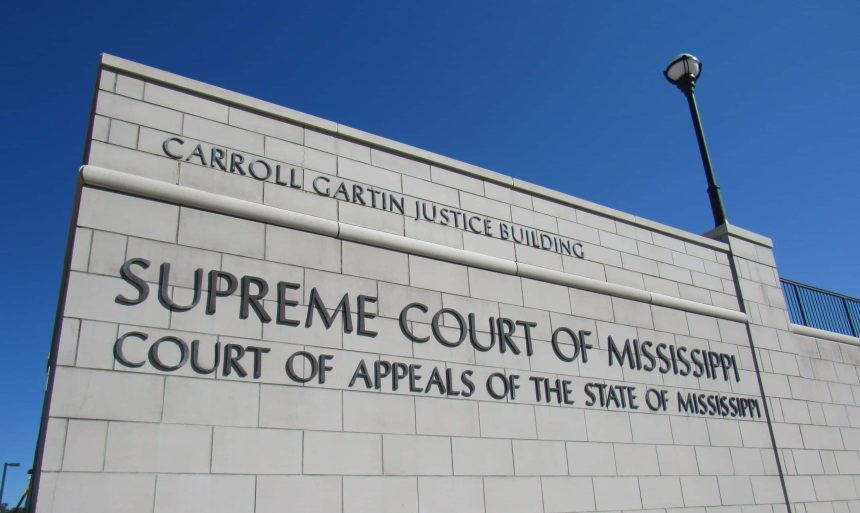
A federal judge has ordered Mississippi to hold special elections for the state’s Supreme Court after ruling that the state’s decades-old judicial election districts violate Section 2 of the Voting Rights Act, unlawfully diluting the voting power of Black residents.
The decision affects the way justices are elected to the Mississippi Supreme Court and requires the state to redraw judicial districts that have remained largely unchanged since 1987. The ruling stems from a lawsuit brought by Black voters who argued that the existing map fractures majority-Black communities and denies them a fair opportunity to elect candidates of their choice.
What the Court Ruled
In a December 2025 order, U.S. District Judge Debra Brown concluded that Mississippi’s current Supreme Court districts violate federal law because they dilute Black voting strength, particularly in the Mississippi Delta. While Black residents make up roughly 38–40% of the state’s population, the court found that the structure of the judicial districts — combined with demographic shifts and the state’s felony disenfranchisement laws — prevents Black voters from meaningfully influencing most Supreme Court races.
The judge barred the state from using the existing map in future elections and directed the Mississippi Legislature to draw new Supreme Court districts that comply with the Voting Rights Act.
U.S. District Judge Sharion Aycock in August ordered Mississippi to redraw the map, which was enacted in 1987, concluding the current configuration dilutes the power of Black voters. The Friday ruling gives the Mississippi Legislature until the end of its 2026 regular session to redraw the map.
Special elections required
The court further ordered that special elections must be held for Mississippi Supreme Court seats once new districts are adopted. Those elections are expected to coincide with the November 2026 general election, but several key details remain unresolved.
Notably, the ruling does not yet specify which Supreme Court seats will be up for election, nor how many justices will be affected. The judge said those determinations will be made after lawmakers enact a remedial map, ensuring the elections reflect lawful district boundaries.
Until that process is complete, current justices — including any temporary appointees — will continue to serve.
Legislative deadline and next steps
Under the court’s order, the Legislature has through the end of its 2026 regular session to adopt a new judicial map. If lawmakers fail to act, the judge has signaled the court could step in to impose a remedial plan.
State officials have said they are reviewing the ruling and may appeal, though no appeal has yet altered the requirement to redraw the districts. The case unfolds as the future of Section 2 of the Voting Rights Act continues to be litigated nationally.
Historical Context
Mississippi’s Supreme Court consists of nine justices, elected in nonpartisan races from three large districts, with staggered eight-year terms. Despite the state’s substantial Black population, only a small number of Black justices have ever served, and all previously held the same Central District seat — often through gubernatorial appointment rather than competitive elections.
The court found that this pattern is not coincidental but rather the product of district lines that fragment Black voting strength across multiple regions.
Broader voting rights implications
The Supreme Court ruling comes amid broader voting rights litigation in Mississippi. In 2024, a separate federal court ordered the state to redraw legislative districts after finding that Black voting power had been diluted in state House and Senate maps. While legally distinct, both cases underscore ongoing federal scrutiny of Mississippi’s election systems.
Civil rights advocates say the Supreme Court ruling represents a significant step toward equitable representation in judicial elections. State leaders, meanwhile, argue that judicial elections should remain insulated from racial and partisan considerations.
What happens next?
For now, the outcome hinges on the Legislature’s response. If lawmakers enact new districts that satisfy federal law, Mississippi voters will see judicial special elections in 2026 under a restructured map. If they do not, the court is prepared to intervene.
Either way, the ruling marks a rare and consequential federal intervention into state judicial elections, with implications not only for Mississippi’s courts but for how voting rights protections apply beyond legislative and congressional districts.
Source: NPR