

August 27, 2026 Story by: Publisher
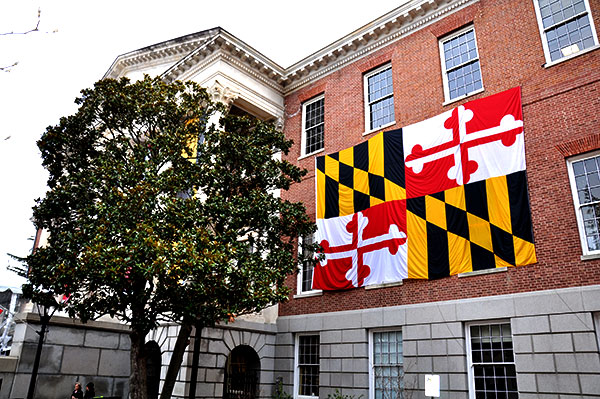
A state judge preliminarily blocked Maryland’s redistricting referendum from appearing before voters in November.
The decision was issued by Anne Arundel County Circuit Judge Robert Thompson ruled Wednesday that the amendment could not appear as Question 3 on the November 2026 ballot, although he paused the effect of his ruling to allow the state to appeal to the Maryland Supreme Court.
The proposed amendment emerged from a broader national redistricting battle following the Supreme Court decision in Louisiana v Callais.
Maryland Democrats, who currently control seven of the state’s eight congressional districts, sought to respond by changing the constitutional standards governing congressional districts.
The amendment would have clarified that requirements for districts to be compact and account for natural boundaries apply to state legislative districts but not congressional districts.
That change could have given Democratic lawmakers greater flexibility to redraw the 1st Congressional District, represented by Republican Rep. Andy Harris.
Thompson’s ruling focused primarily on the process used to put the amendment before voters. He concluded that the General Assembly failed to follow deadlines established by state law for ballot measures and found the wording of the proposed ballot question misleading.
He also ruled that the amendment violated Maryland’s constitutional single-subject requirement because it combined changes to congressional redistricting standards with a provision concerning the state Supreme Court’s jurisdiction over redistricting lawsuits.
Maryland sends congressional redistricting amendment to voters:
Maryland lawmakers have approved a proposed constitutional amendment that could pave the way for new congressional district lines ahead of the 2028 elections, placing the final decision in the hands of voters this November.
Both chambers of the Maryland General Assembly passed the constitutional amendment referendum bill on congressional redistricting.
The Maryland House of Delegates voted 96-38 to pass House Bill 2100, sending it to the Senate, which voted 32-13 to approve the bill late Tuesday afternoon, sending it to the governor.
The General Assembly passed the measure during a special legislative session, arguing the state must be prepared to respond as Republican-led states pursue mid-decade redistricting efforts designed to reshape the balance of power in the U.S. House. Gov. Wes Moore has backed the proposal, saying that while national redistricting reform remains the preferred solution, Maryland cannot afford to remain on the sidelines as other states redraw congressional boundaries.
The proposed amendment would revise Maryland’s Constitution to clarify that requirements for compactness and respect for natural and political boundaries apply only to state legislative districts, not congressional districts.
The legislation does not immediately redraw Maryland’s congressional districts and will not affect the 2026 elections. Instead, if voters approve the constitutional amendment, lawmakers could consider adopting a new congressional map before the 2028 election cycle.
Maryland sets special session to consider constitutional amendment on congressional redistricting
Maryland lawmakers will return to Annapolis on Aug. 3 for a special legislative session to consider a proposed constitutional amendment that could pave the way for new congressional district maps ahead of the 2028 elections.
Democratic leaders say the amendment is intended to clarify the state constitution following a 2022 court ruling that invalidated Maryland’s previous congressional map and establish a transparent legal framework for future redistricting.
“For months, I have said that inaction is not an option and we cannot sit on the sidelines while voting rights, fair representation, and the foundations of our democracy come under attack across the country,” Gov. Wes Moore said in a statement. “I appreciate the General Assembly’s continued conversations and the agreement to come back to finish the work.”
“Across the country, we are watching coordinated efforts to weaken voting rights, dilute Black representation, and bend the rules of democracy for partisan gain at the very moment when core protections of the Voting Rights Act have been gutted and the right to fair representation is under assault. Until we have national redistricting reform, Maryland will not be caught flat-footed.”
The special session comes months after the General Assembly failed to advance a Democratic-backed proposal that could have redrawn Maryland’s congressional map to create a potential 8-0 Democratic delegation by making the state’s lone Republican-held district more favorable to Democrats.
If approved by three-fifths of both legislative chambers, the constitutional amendment would be placed before Maryland voters on the November 2026 ballot, with any subsequent congressional map changes applying to future election cycles, including 2028. Republicans have criticized the effort as a partisan attempt to eliminate the state’s only GOP-held congressional seat.
Maryland passes Voting Rights Act of 2026 (04/28/2026)
The Maryland General Assembly passed the Voting Rights Act of 2026 (SB 255) during its legislative session.
The bill creates a legal framework to prevent voter suppression and representation dilution at the local level. Its passage comes at a time of significant national anxiety regarding the weakening of the federal Voting Rights Act of 1965.
Louisiana v. Callais is expected in 2026, and could significantly reshape the future of Section 2 of the Voting Rights Act and the extent to which states can consider race when drawing electoral maps to ensure fair representation.
Legislative Update
Building upon the momentum of the 2025 MDVRA campaign—where vote dilution protections (SB 342) passed out of the Senate and a stepping stone towards comprehensive language assistance (HB 983/SB 685) was signed into law—the 2026 MDVRA campaign focuses on enacting protections against discriminatory vote dilution (SB 255/HB 350) and voter intimidation and suppression (HB 219). HB 219 also boosts transparency about election changes and directs judges to interpret laws and rules in the most pro-voter, pro-democracy way possible.
The Ccre of SB 255: Protections for local elections
While federal law often focuses on statewide and congressional contests, SB 255 specifically targets Counties and Municipal Corporations. The legislation addresses long-standing concerns that local election structures such as at-large voting systems can be used to systematically dilute the influence of minority communities.
Key provisions of the Act include:
- Prohibition of voter dilution: It explicitly bans election practices that result in members of a protected class having less opportunity than other members of the electorate to participate in the political process or elect candidates of their choice.
- New enforcement authority: The Act grants the Attorney General’s Office and private citizens the standing to sue local governments over discriminatory practices.
- Pre-clearance requirements: In certain circumstances, local jurisdictions with a history of discrimination must now seek pre-clearance or approval before changing their election laws or district lines, ensuring that new policies do not have a regressive effect on minority voters.
- Language accessibility: The law strengthens requirements for local governments to provide voting materials and assistance in languages other than English in areas with significant non-English speaking populations.
The path to passage was far from smooth. The final days of the session were marked by what local observers called a “Monday Meltdown,” a period of intense legislative friction and procedural hurdles. Advocates from the NAACP Legal Defense Fund (LDF) and other civil rights groups had been pushing for the bill for years, arguing that Maryland’s diverse population was not accurately reflected in many local governing bodies.
The NAACP Legal Defense Fund (LDF) has been a primary advocate for this legislation, emphasizing that it serves as a crucial state-level defense against the erosion of federal protections. According to the LDF, the Maryland Voting Rights Act is designed to address systemic barriers that have historically prevented Black and Brown communities from achieving fair representation in local governance. By establishing a clear legal pathway to challenge “at-large” voting systems which often allow a slim majority to control every seat on a council the LDF argues the law finally provides Marylanders with the tools to dismantle structures that dilute their collective voice. Their advocacy highlights that the Act isn’t just about preventing suppression at the ballot box, but about ensuring that every community has a seat at the table where local decisions regarding schools, housing, and infrastructure are made.
Recent research from the Brennan Center for Justice shows that Maryland ranked second in the nation in 2022 for the number of Black voters that did not vote but would have if turnout rates were equal between Black and white Marylanders. In other words, due to Maryland’s significant Black population, its racial turnout disparities are warping its electorate to sharply reduce Black political power.
ACLU of Maryland has found that, as of 2024, more than half of Maryland municipalities have substantial populations of people of color, and nearly a quarter those municipalities have all white governments. And they found that one-third of the counties with substantial populations of people of color lack any elected officials of color. There is a high risk that Black voters and other voters of color have not been able to elect candidates of their choice.
The Maryland Voting Rights Act joins a growing trend of “state VRAs” passed in states like New York, California, and Virginia. These laws are designed to restore protections that were lost following the U.S. Supreme Court’s 2013 decision in Shelby County v. Holder, which effectively ended federal oversight of election changes in jurisdictions with histories of discrimination.
Source: NAACP Legal Defense Fund / NBC News / Politico / WBALTV