

February 16, 2026 Story by: Publisher
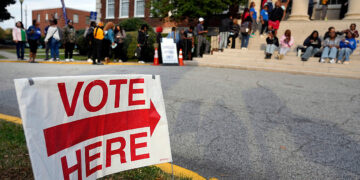
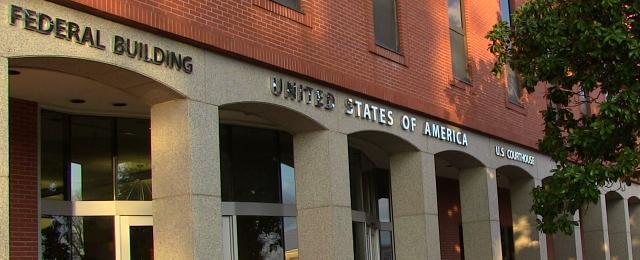
A voting rights trial is set to begin Tuesday, February 17 in federal court as civil rights advocates challenge the electoral map of DeSoto County, Mississippi, alleging it deliberately dilutes Black voting strength and denies Black residents meaningful representation in local government.
In the lawsuit Harris v. DeSoto County, filed in September 2024, plaintiffs — including Black residents Harold Harris and Pastor Robert Tipton Jr., Delta Sigma Theta Sorority, Inc., and the DeSoto County NAACP Unit 5574 — argue that the county’s current five-district plan violates Section 2 of the Voting Rights Act by fragmenting the county’s roughly one-third Black population to ensure white majorities in each district.
All five current county voting districts were drawn to maintain majority-white representation. None of the 25 county offices are currently held by a Black representative, even though the Black population has grown from 12% to 36% since the 2000 Census.
Black citizens were 31.7% of the population of DeSoto County in the 2020 Census—a 9.2 percentage point increase in the County’s share of Black residents since 2010 and an almost three-fold increase since 2000.
These offices include the Board of Supervisors, Board of Education, Election Commissioners, Justice Court judges, and constables. Many Black candidates have tried to run forthese offices, but not a single one was elected in the past 20 years.
DeSoto County residents were able to elect a Black candidate, Theresa Gillespie Isom, to the Mississippi State Senate in 2025, after a similar lawsuit forced the creation of a new Black-opportunity Senate district in DeSoto County.
Background
The Mississippi State Conference of the NAACP filed a lawsuit in 2022 against Mississippi Board of Election Commissioners, Gov. Tate Reeves, Attorney General Lynn Fitch and Mississippi Secretary of State Michael Watson, claiming that the legislative voting maps “illegally dilute the voting strength of Black Mississippians.”
The U.S. District Court for the Southern District of Mississippi’s Northern Division agreed with the NAACP in a 2024 decision and ordered the Legislature to redraw its districting maps to create more Black-majority districts to give Black voters equal participation in the political process.
The court ruled that the Legislature needed to create more Black-majority Senate districts around DeSoto County in North Mississippi and the city of Hattiesburg in South Mississippi and more Black-majority House districts in Chickasaw and Monroe counties.
According to the complaint, the 2022 redistricting plan continues a long pattern of underrepresentation: despite Black residents’ significant share of the population, not a single Black candidate has been elected to one of the 25 county offices governed by these districts in at least two decades.
The lawsuit highlights that the plan was enacted over the objections of local Black community members and splinters cohesive Black neighborhoods across multiple districts, limiting their ability to elect candidates of choice amid racially polarized voting. Plaintiffs contend that an alternative map could be drawn consistent with traditional principles that would create at least one “Black-opportunity district,” thereby giving Black voters a real chance to elect preferred candidates.
The complaint draws on detailed evidence that the 2022 plan not only deprives Black residents of meaningful political power but also reinforces structural disparities in education, public services, and community responsiveness by county officials. It further notes that during the redistricting process, citizen-led alternative proposals — including maps with a majority-Black district — were rejected without substantive consideration.
The Mississippi NAACP chapter and DeSoto County made legal objections to the Mississippi Legislature’s redrawn legislative district maps in two separate court briefs, with both complaining that the plans for DeSoto County do not offer equal participation in the political process.
DeSoto County says the Mississippi Legislature’s newly redrawn legislative district maps “violate traditional redistricting principles and place DeSoto residents’ representative rights at risk.”
“As will be discussed more fully, however, in DeSoto County in particular, the District 1 and District 11 Senate maps dismantle communities of interest, disregard natural geographical boundaries, and distort commonsense cartography,” DeSoto County wrote in a March 14 court brief.
The NAACP wrote that the redrawn maps for the Senate’s redistricting of DeSoto County and the House’s new plan for Chickasaw and Monroe counties do not allow Black voters to have a fair chance to elect candidates of their choice.
“Because the Legislative Plans do not create new districts where Black voters have a realistic opportunity to elect candidates of their choice despite racially polarized voting, there is no functional change from the unlawful 2022 Plans,” the NAACP said in its March 14 brief.
The three-judge panel approved the Mississippi House’s redrawn district map. The judges’ decision said the redrawn House districts 16 and 22 align with Section 2 of the Voting Rights Act, and noted the Mississippi State Conference of the NAACP, a plaintiff in the case, agrees with the redrawn House map for the Hattiesburg area.
Plaintiffs seek:
- A Declaration that the 2022 Plan violates the VRA because it dilutes the voting strength of the County’s Black population.
- A permanent injunction prohibiting Defendants from administering, implementing, or conducting any future elections under the 2022 Plan.
- An order directing Defendants to hold special elections under a valid redistricting plan to remedy the ongoing vote dilution caused by the 2022 Plan.
At trial, scheduled to begin February 17, 2026, attorneys for the NAACP Legal Defense and Educational Fund (LDF), the ACLU of Mississippi, and the Election Law Clinic at Harvard Law School will press the argument that the county’s map violates federal law by denying Black voters an equal opportunity to participate in the political process and elect representatives of their choice.
Source: NAACP LDF