

April 6, 2026 Story by: Editor
Governor Ron DeSantis signed the “Florida SAVE Act” (HB 991) into law, ushering in a sweeping set of new voting regulations that proponents call a victory for election integrity but critics denounce as a targeted effort to disenfranchise millions of residents.
The GOP-controlled Florida House approved the measure, 77-28. The vote came after the Senate approved the measure, mostly along party lines, 27-12.
The bill signing, held in the Republican stronghold of The Villages, was met with immediate resistance. Within hours of the Governor’s signature, a coalition of civil rights organizations including the NAACP Legal Defense and Educational Fund (LDF), the League of Women Voters of Florida, and Hispanic advocacy groups filed federal lawsuits to block the measure.
Data from the state said that 20.6 million people in Florida had a REAL-ID-compliant driver’s license, State Sen. Erin Grall, R-Vero Beach, told lawmakers, according to reporting by the Florida Phoenix.
The state counted 872,408 Floridians who did not have that valid form of identification.
In 2025, the state identified 198 “likely noncitizens who illegally registered and/or voted in Florida,” according to a January 2026 report by the state Office of Election Crimes and Security. With more than 13 million people on Florida’s voter rolls, that’s a rate of less than 0.0015%.
The Florida SAVE Act, which mirrors federal legislation championed by President Donald Trump, introduces several strict requirements scheduled to take effect in 2027:
Governor Ron DeSantis signed House Bill 991 into law, which intends to strengthens election integrity in the State of Florida in several key ways:
- Requires verification of U.S. citizenship using REAL ID data for new and updated voter registrations.
- Establishes a clear process to identify and remove potentially ineligible noncitizens from voter rolls.
- Allows individuals to provide documentation to confirm eligibility.
- Adds explicit notice that submitting false voter registration information is a felony.
- Enhances coordination between state and local agencies to identify potentially ineligible voters.
- Requires supervisors of elections to investigate and take appropriate action.
- Requires voting to be conducted using paper ballots, ensuring a verifiable record of every vote.
- Updates identification requirements to ensure only secure, government-issued IDs are accepted.
- Requires candidates to affirm they meet all legal qualifications for office.
- Mandates disclosure of dual citizenship.
- Requires federal candidates to disclose stock trading activity while in office.
- Prevents last-minute name changes intended to mislead voters.
- Establishes a legal process to challenge candidate eligibility.
- Establishes a five-year statute of limitations for felony election offenses.
- Cracks down on election fraud and petition-related misconduct.
- Prohibits candidates, political committees, and parties from knowingly accepting foreign contribution.
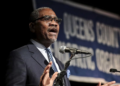
In response, Legal Defense Fund Director of Policy Demetria McCain issued the following statement:
“While using the false narrative about voter fraud, Florida legislators and its governor are moving our democracy back to Jim Crows days at the expense of millions of voters. Bills like Florida’s SAVE Act that saddle voters with expensive and burdensome document requirements in order to access our elections are poll taxes in disguise, strategically designed to disenfranchise people who have already faced historical discrimination at the ballot.”
The lawsuits specifically highlight the burden on:
- Black Voters: Elderly Black voters may lack necessary documentation if they were born outside of hospitals during the Jim Crow era and never issued a birth certificate.
- Students: The elimination of student IDs as a valid form of identification is seen as a direct barrier to younger voters.
As the state prepares for the 2026 midterms under existing rules, the 2027 implementation of the SAVE Act sets the stage for a protracted legal battle over the balance between election security and voter accessibility in one of the nation’s most critical swing states.
Source: Central Florida Public Media / NAACP LDF