

Wednesday, May 27, 2026 Story by: Publisher
South Carolina Gov. Henry McMaster called lawmakers into a special session to redraw the state’s congressional map, but the effort ultimately failed after the Senate adjourned without advancing the proposed map.
The South Carolina House approved a proposed map 74-37 on May 20, but the Senate voted 24-20 against ending debate on May 26 and adjourned without passing it.
On May 27, McMaster confirmed the state would use its existing congressional map for the 2026 election.
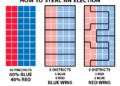
The Republican-backed plan sought to strengthen the party’s control of all seven of South Carolina’s congressional districts and would have significantly altered Rep. Jim Clyburn’s 6th Congressional District.
With lawmakers unable to reach an agreement, South Carolina will use its existing congressional map for the 2026 midterm elections, leaving Clyburn’s seat unchanged for now.
Gov. McMaster’s calls special session on congressional redistricting
South Carolina’s escalating redistricting battle took another dramatic turn Tuesday, May 12, after Gov. Henry McMaster announced plans to call lawmakers back to Columbia for a special legislative session focused on congressional redistricting, despite the state Senate rejecting an earlier attempt to reopen debate on new maps.
The move comes amid a growing national Republican push to redraw congressional districts following the U.S. Supreme Court’s recent decision in Louisiana v. Callais, a ruling that weakened portions of the Voting Rights Act previously used to protect Black-majority districts in the South.
Republican officials in multiple states, including Alabama, Georgia, Louisiana and Tennessee, have since explored new congressional maps that could reshape Black political representation ahead of the 2026 midterm elections.
In South Carolina, the latest proposal centers on the state’s only Democratic-held congressional seat represented by Jim Clyburn, the longtime congressman whose 6th Congressional District contains a substantial Black voting population.
Republicans have openly discussed altering the district in ways that could make it more favorable to the GOP, potentially threatening one of the South’s most prominent Black political strongholds.
The South Carolina Senate on Tuesday failed to secure the two-thirds vote necessary to continue legislative business after the regular session adjourned, effectively halting immediate consideration of the redistricting proposal. Several Republicans joined Democrats in opposition, creating a rare split within the GOP-controlled chamber.
Among the most vocal critics was Senate Majority Leader Shane Massey, who warned that aggressively targeting Clyburn’s district could politically backfire.
Massey argued South Carolina’s congressional map is already heavily tilted toward Republicans, who currently hold six of the state’s seven U.S. House seats. Further manipulation of district lines, he said, could unintentionally energize Democratic and Black voter turnout in surrounding districts.
The failed Senate vote drew immediate backlash from allies of Donald Trump, whose political network has strongly encouraged Republican-led states to pursue aggressive mid-decade redistricting efforts. Trump allies reportedly viewed South Carolina as a prime opportunity to eliminate a Democratic seat and strengthen the GOP’s narrow U.S. House majority before 2026.
Despite previously expressing hesitation about reopening the issue, McMaster now appears prepared to move forward with a special session. According to multiple reports, the governor intends to formally summon lawmakers back to the State House later this week to revisit congressional boundaries.
The political stakes extend well beyond South Carolina. Across the South, Republican-led legislatures are increasingly testing how far states can go in redrawing congressional districts after the Supreme Court’s latest voting-rights decision. Civil-rights advocates warn the new legal landscape could accelerate efforts to dismantle districts that helped Black voters elect candidates of their choice for decades.
For Democrats, the fight over South Carolina’s map has become symbolic of a broader national struggle over voting rights, racial representation and partisan power ahead of the next census cycle. A
ny attempt to redraw Clyburn’s district would almost certainly trigger immediate legal challenges and intensify scrutiny over whether Republican lawmakers are using race and party affiliation to reshape political power in the South.
Source: Fox Carolina / Politico