

Friday, March 27, 2026 Story by: Editor
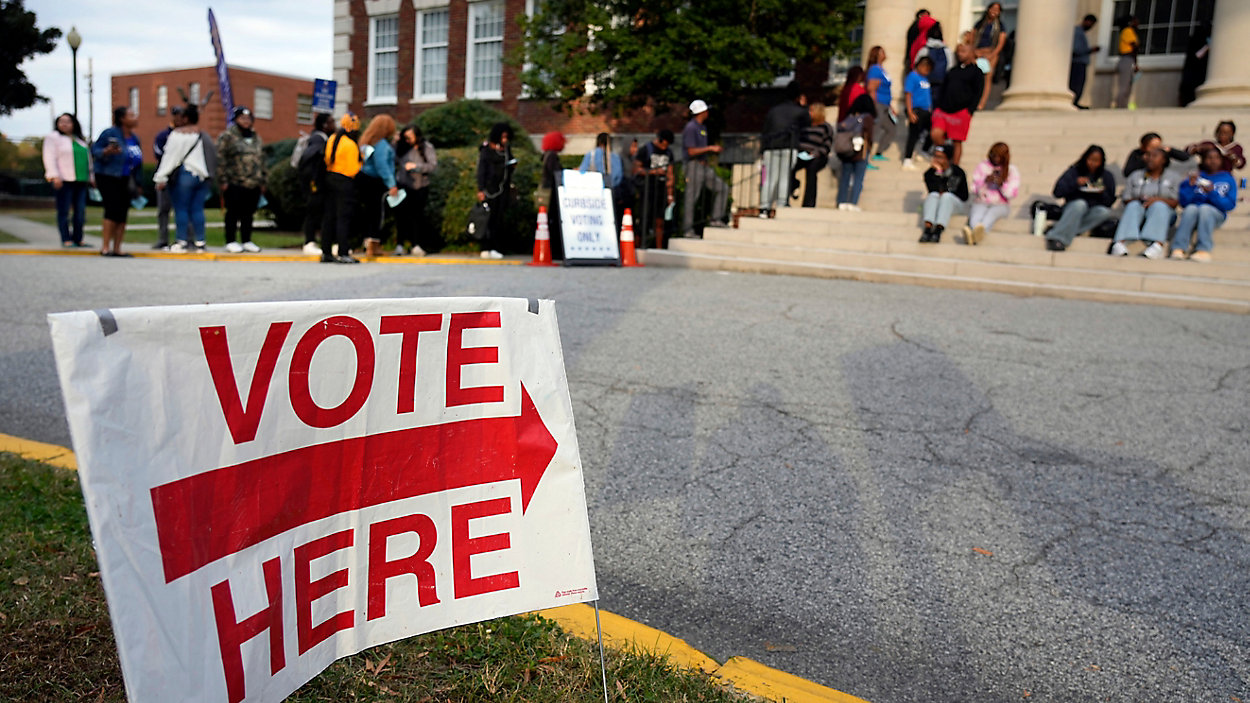
A federal judge on Thursday upheld the state’s photo voter identification law, rejecting claims from civil rights groups that the mandate was designed to discriminate against Black and Latino voters.
The 134-page ruling by U.S. District Judge Loretta Biggs marks a major victory for Republican legislative leaders. The decision effectively clears the path for the long-contested 2018 law to remain in place for the upcoming general elections, further solidifying a requirement that has faced years of litigation in both state and federal courts.
The decision comes at a time of high political tension in North Carolina. State NAACP President Deborah Dicks Maxwell criticized the ruling, stating the case “deeply disappointed and ignores the real and documented barriers” that voter ID laws have on certain voters. Conversely, Republican leaders praised the decision as a win for election integrity and a validation of the will of the voters who supported the 2018 constitutional amendment.
The NAACP, which first filed the lawsuit in 2018, had argued that the voter ID law discriminates against Black and Latino voters, who are less likely to have a photo ID. The state NAACP and local chapters, argued that the ID requirement violated the U.S. Constitution and the federal Voting Rights Act.
At trial, the NAACP alleged Republican legislators passed the voter ID law to entrench their political power by discouraging people historically aligned with Democrats from voting.
U.S. District Judge Loretta Biggs, an appointee of President Barack Obama, acknowledged in her decision that the evidence presented at trial suggested the burden of obtaining a qualifying ID falls more heavily on racial minority voters. She noted that thousands of voters—a disproportionate number of whom are Black or Hispanic might lack the required identification on Election Day.
However, the judge ultimately concluded that the plaintiffs, led by the state NAACP, failed to prove that the Republican-controlled General Assembly acted with “discriminatory intent” when passing the 2018 law.
In 2019, Biggs issued a preliminary injunction blocking the 2018 law, arguing it was tainted by the same racial bias that led to the overturning of the 2013 version. However, the 4th U.S. Circuit Court of Appeals reversed her decision, ruling that she had placed undue emphasis on the General Assembly’s past conduct when evaluating the newer legislation.
Lawyers for Republican leaders argued throughout the trial that the 2018 version of the law was “one of the most permissive” in the country. They pointed to the expanded list of acceptable IDs—including student and employee IDs—and the availability of “reasonable impediment” forms that allow voters without IDs to cast a ballot that will still be counted if certain conditions are met.
The fight over voter ID in North Carolina has been a marathon legal struggle spanning more than a decade:
- 2013: An earlier, stricter voter ID law was passed but was eventually struck down by a federal appeals court, which famously ruled that it targeted African Americans with “almost surgical precision.”
- 2018: Following a constitutional amendment approved by voters, the legislature passed the current law (S.B. 824) during a “lame-duck” session.
- 2019–2022: The law was blocked by various injunctions. In late 2022, the Democratic-majority State Supreme Court struck it down.
- 2023: After the State Supreme Court flipped to a Republican majority, the court reheard the case and reinstated the law.
Thursday’s federal ruling was the final major hurdle for the GOP-backed mandate. While the NAACP has expressed deep disappointment, the law has already been in active use during recent municipal elections and the recent March primary.
Source: AP News / Raleigh News and Observer