

Black Politics Now
  • Home
  • Business
  • Civil Rights
  • Criminal Justice
  • Education
  • Elections
  • Health
  • Policy
  • Reparations
  • Voting Rights
No Result
View All Result
  • Login
  • Register
Black Politics Now
  • Home
  • Business
  • Civil Rights
  • Criminal Justice
  • Education
  • Elections
  • Health
  • Policy
  • Reparations
  • Voting Rights
No Result
View All Result
Black Politics Now
No Result
View All Result

Mass exodus hits DOJ’s Civil Rights and Voting Rights division

Black Politics Now by Black Politics Now
May 22, 2025
in Voting Rights
0
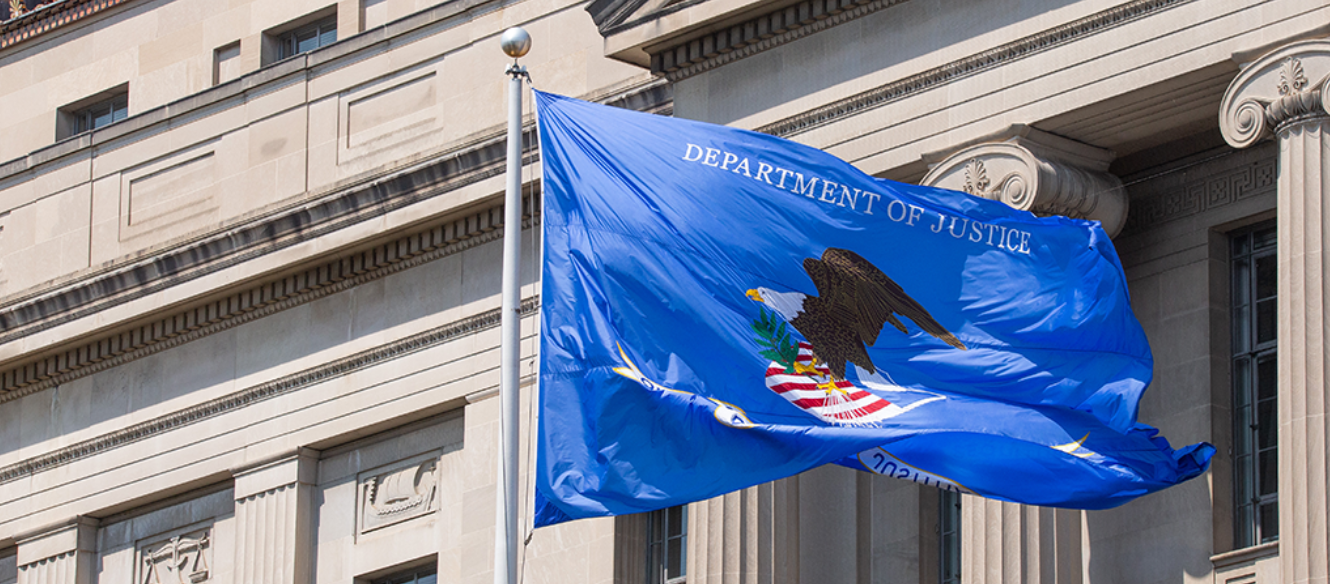
Image Source: U.S Department of Justice

(Photo courtesy of: U.S Department of Justice)

74
SHARES
1.2k
VIEWS
Share on FacebookShare on Twitter

May 20, 2025 Story by: Publisher

You might also like

Tennessee approves congressional map dismantling state’s sole majority-Black district

Virginia congressional map challenge rejected by Supreme Court

Supreme Court clears path for Alabama congressional map eliminating Black-majority district

The U.S. Department of Justice’s Civil Rights Division is undergoing a sweeping transformation under the Trump administration, leading to a historic exodus of career attorneys and a sharp pivot in its mission. Since January 2025, approximately 70% of the division’s attorneys have either resigned, taken deferred resignation, or been reassigned—shrinking the civil enforcement team from about 365 to just over 100.

The upheaval has triggered alarm among civil rights advocates, legal scholars, and former Justice Department officials, who warn that the staffing losses and redirection of priorities are severely undermining the division’s ability to uphold long-standing civil rights protections.

A Shift in Mission Under New Leadership

At the heart of the transformation is Assistant Attorney General Harmeet Dhillon, who assumed leadership of the Civil Rights Division in early 2025. Dhillon, a staunch conservative and former member of the Republican National Committee, has steered the division away from its traditional focus—such as enforcing laws against police misconduct, voting discrimination, and disability rights violations—and toward investigating alleged anti-Christian bias, scrutinizing transgender participation in sports, and challenging diversity, equity, and inclusion (DEI) initiatives.

Internal documents and public statements suggest that the division has also received directives to align its work with executive orders issued by President Trump, many of which aim to reshape how federal agencies approach civil rights.

The Collapsing Voting Section

Perhaps the most stark example of the division’s decline is found in the DOJ’s Voting Section, once a formidable unit tasked with defending federal voting rights. According to internal estimates from Justice Connection, a group supporting the remaining staff within the division, the Voting Section has been reduced to just three attorneys—down from nearly 30 at the start of the year.

Previously led by a chief and seven section managers, the Voting Section now operates without most of its leadership and legal staff. The reduction follows what insiders describe as a systematic dismantling of the team through forced reassignments, retirements, and the deferred resignation program.

The shift in priorities is clear: attorneys have reportedly been told to drop all active voting rights cases and pivot to investigating potential voter fraud, despite scant evidence of such activity nationwide.

Legal Community and Advocates Sound the Alarm

The rapid deterioration of the Voting Section has prompted urgent warnings from legal experts and former DOJ officials.

“This is not a budgetary issue—this is an intentional retreat from the federal government’s responsibility to protect voting rights,” said Justin Levitt, a constitutional law scholar and former deputy assistant attorney general in the Civil Rights Division. Levitt pointed to the reassignment of senior voting section managers as evidence that leadership has no intention of enforcing existing voting laws.

Omar Noureldin, senior vice president of policy and litigation at Common Cause and a former senior counsel to the division, echoed that sentiment. “This assault on the Voting Section is causing profound and lasting damage. It sends a chilling message to both voters and would-be violators: the DOJ is no longer watching,” he said.

Widening Fallout Across the Division

The crisis is not confined to voting rights. Sections tasked with overseeing police reform, disability access, and fair housing have also been depleted. Many career attorneys who remain have reported growing ethical concerns about the direction of their work, fearing they are being asked to pursue politically motivated investigations that conflict with the division’s historic mission.

Internal resistance has surged, with staff citing discomfort and disillusionment over the administration’s new focus and the politicization of enforcement priorities.

Future Uncertain Amid Continued Litigation

Despite the turmoil, the DOJ remains a party in at least 29 voting rights and redistricting cases across 18 states. In all but two of those, private plaintiffs are also involved, meaning litigation may continue even if the DOJ withdraws.

Nevertheless, critics fear the damage has already been done. The division’s weakened capacity could hinder federal oversight in the lead-up to the 2026 midterm elections, particularly in states implementing restrictive voting laws.

Assistant Attorney General Dhillon has stated that new hires will replenish the staff, specifically individuals who align with the administration’s current goals. However, observers warn that replacing seasoned civil rights litigators with ideologically driven appointees will not restore the division’s credibility—or its effectiveness.

A Turning Point for Federal Civil Rights Enforcement

As the Civil Rights Division navigates this period of profound transformation, the long-term implications are coming into focus. With the Biden-era priorities being systematically rolled back and seasoned attorneys leaving in droves, the future of federal civil rights enforcement in the United States hangs in the balance.

“This is the most consequential reorganization of the Civil Rights Division in decades,” said a former DOJ official who requested anonymity. “What’s at stake isn’t just staffing—it’s the soul of the department.”

Source: Democracy Docket / The Guardian / CF Public / NPR

Tags: 2026 midterm electionscivil rights divisionDOJ withdrawsfederal voting rights lawsU.S. Department of JusticeU.S. Department of Justice's Civil Rights Divisionvoting rights advocatesVoting Section
Share30Tweet19
Black Politics Now

Black Politics Now

Recommended For You

Tennessee approves congressional map dismantling state’s sole majority-Black district

by Black Politics Now
May 14, 2026
0
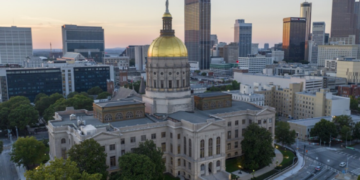
The Tennessee State Capitol in Capitol Hill Nashville, United States

The newly proposed districts would split the 9th Congressional District, effectively carving Tennessee's only majority-Black seat into three separate districts. 

Read moreDetails

Virginia congressional map challenge rejected by Supreme Court

by Black Politics Now
May 16, 2026
0
Virginia congressional map challenge rejected by Supreme Court

The U.S. Supreme Court on Friday, May 15, declined to revive an effort to redraw Virginia’s congressional map, leaving the state’s current districts in place for the 2026...

Read moreDetails

Supreme Court clears path for Alabama congressional map eliminating Black-majority district

by Black Politics Now
May 12, 2026
0
Court orders Alabama to use new map after violating ‘Voting Rights Act’, ensuring fair representation for Black voters

The U.S. Supreme Court on Monday, May 11, in a 6-3 ruling, cleared the way for Alabama to pursue a congressional map that could eliminate the state’s majority-Black...

Read moreDetails

Federal appeals court vacates order requiring Mississippi to redraw Supreme Court map

by Black Politics Now
May 12, 2026
0
Federal judge rules Mississippi Supreme Court election map dilutes Black voters, violates Voting Rights Act, and orders maps to be redrawn

The U.S. Fifth Circuit Court of Appeals has canceled a federal judge’s order that would have required Mississippi lawmakers to redraw the state’s Supreme Court voting districts.

Read moreDetails

Gov. McMaster plans to call special session to redraw South Carolina House map

by Black Politics Now
May 14, 2026
0
A visitor explores a voting rights exhibit at the International African American Museum in Charleston, South Carolina, January 2024. Jim Watson, AFP/Getty Images:

In South Carolina, the latest proposal centers on the state’s only Democratic-held congressional seat represented by Jim Clyburn, the longtime congressman whose 6th Congressional District contains a substantial...

Read moreDetails
Next Post
Federal civil rights probe launched into Thomas Jefferson High’s admissions policy

Federal civil rights probe launched into Thomas Jefferson High’s admissions policy

Leave a Reply Cancel reply

Your email address will not be published. Required fields are marked *

ADVERTISEMENT

Related News

States sue to stop Trump’s order blocking birthright citizenship

President Trump signs executive order rolling back bedrock of ‘Civil Rights Era’ measure

January 26, 2025
In January at Curlew Creek Elementary School, tutor Susan Cohen from the Read Across Pinellas program assists first grader Za’mir Maceachron with a reading lesson. The Pinellas County school district has launched similar initiatives aimed at closing the achievement gap among its students. [DOUGLAS R. CLIFFORD | Times]

Achievement gap between Black, white students still plagues Florida schools

October 21, 2024
"You just have to stay persistent and keep pushing forward," says Rep. Barbara Lee, reflecting on the determination that fuels her. (Leah Herman/Courtesy of U.S. House of Representatives)

Former Rep. Barbara Lee wants to be Oakland’s next mayor. What’s her platform?

February 26, 2025
Black Politics Now

Get informed on African American politics with "Black Politics Now," your ultimate source for political engagement.

CATEGORIES

  • Business
  • Civil Rights
  • Congressional Black Caucus
  • Criminal Justice
  • Data
  • Department of Justice
  • Diversity Initiatives
  • Education
  • Elections
  • Enviroment
  • Equity
  • Hate Crimes
  • Health
  • Housing
  • Investigations
  • Legal Defense Fund
  • NAACP
  • Policy
  • Real Estate
  • Reparations
  • Research
  • Sports
  • State Issues
  • Study
  • Supreme Court
  • Technology
  • Voting Rights
  • World

Quick Link

  • Privacy Policy
  • Terms of service
  • Contact us

Download Our App

© 2024 Black Politics Now | All Right Reserved

Welcome Back!

Login to your account below

Forgotten Password? Sign Up

Create New Account!

Fill the forms bellow to register

All fields are required. Log In

Retrieve your password

Please enter your username or email address to reset your password.

Log In
wpChatIcon
wpChatIcon
No Result
View All Result
  • Home
  • Business
  • Civil Rights
  • Criminal Justice
  • Education
  • Elections
  • Health
  • Policy
  • Reparations
  • Voting Rights
  • Login
  • Sign Up
  • Cart
SUBSCRIBE

© 2024 Black Politics Now | All Right Reserved

Join the Movement, Subscribe Now!(Don't worry, we'll never spam you!)

Don’t miss a beat—get the latest news, inspiring stories, and in-depth coverage of the issues that matter most to the Black community. Be part of the conversation and stay connected.

Enter your email address